
Restore ADAS camera and sensor accuracy with a verified calibration process based on manufacturer requirements.
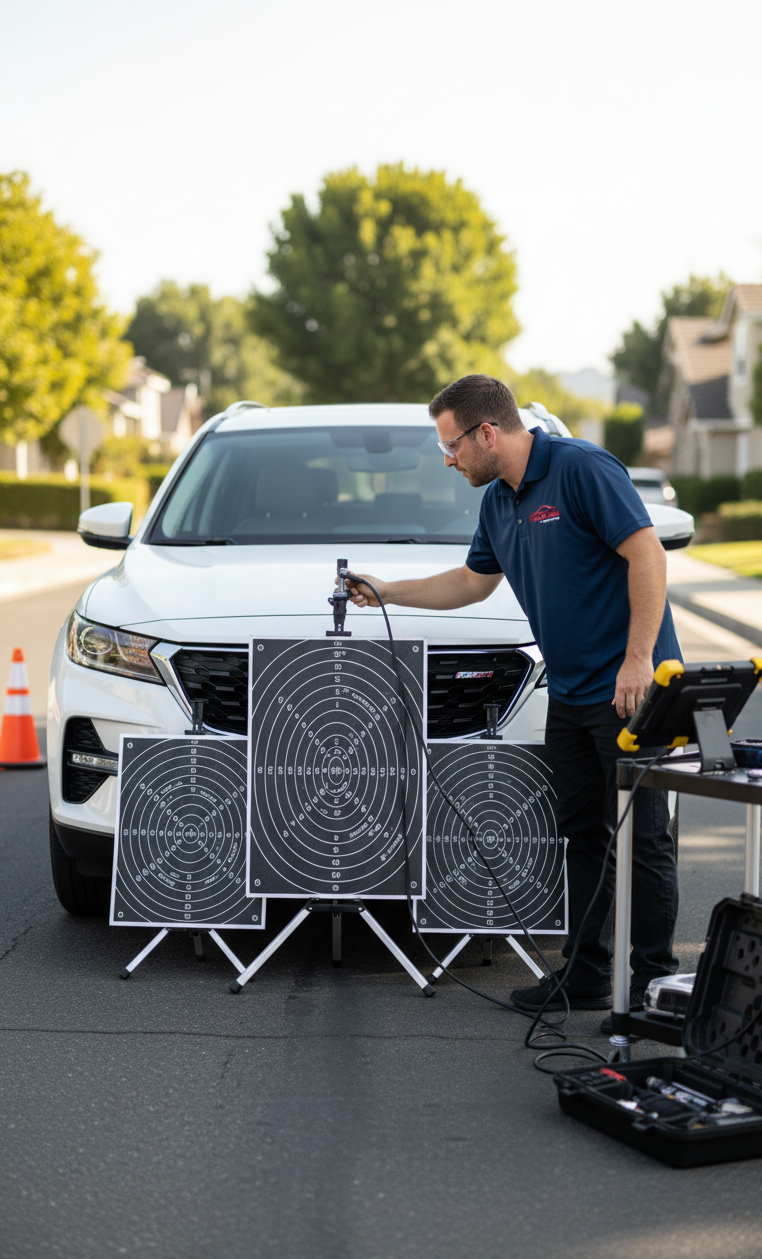
ADAS calibration restores the accuracy of Advanced Driver Assistance Systems after repairs or changes that can affect cameras and sensors. Santa Clarita Auto Glass Repair recalibrates components such as the forward facing windshield camera, front radar, corner radar, and supporting sensors so features like lane keeping, forward collision warning, and automatic emergency braking operate correctly.
Your vehicle may require static calibration with targets, dynamic calibration with a verification drive, or both based on manufacturer requirements. Request a quote and schedule an appointment to confirm the correct calibration method for your vehicle.
Get a response within minutes
ADAS calibration is built to restore accuracy for windshield cameras, radar, and safety sensors after changes that can affect alignment. These highlights explain what's included so you know what gets checked, calibrated, and verified.
Calibration steps follow requirements tied to your make, model, and ADAS package, including method selection, setup conditions, and confirmation requirements.
Static calibration uses targets and controlled positioning in a setup environment. Dynamic calibration is confirmed during a road verification drive under required conditions.
Forward facing camera systems behind the windshield often need recalibration after windshield replacement, camera bracket changes, or camera related warnings. This supports proper performance for lane keeping, lane departure warning, and collision warning systems.
ADAS can include front radar, corner radar, rear radar, blind spot monitoring sensors, and other supporting sensors depending on vehicle configuration. Calibration helps restore accurate sensor aim and correct system operation for driver assist features.
The process includes scan validation before and after the calibration event, plus documented completion notes. You get clear confirmation that the required calibration steps were performed.
ADAS calibration is often required after repairs or changes that can shift camera or sensor alignment. It can also be needed when driver assist features behave inconsistently, even if no warning lights appear.
Windshield camera systems may require recalibration after glass replacement because camera position, bracket alignment, or viewing angles can change. This is especially common for forward facing cameras that support lane keeping, forward collision warning, and automatic emergency braking.
Front end repairs can affect radar position, sensor brackets, and mounting angles. Calibration helps restore accuracy for systems tied to adaptive cruise control, collision avoidance alerts, and automatic emergency braking.
Alignment adjustments, suspension work, tire size changes, and ride height changes can alter reference points used by ADAS systems. Vehicles with lane centering, lane departure warning, and radar guided cruise features may require calibration after these changes.
If lane keeping assistance feels off, lane departure alerts trigger randomly, or forward collision warnings seem early or late, calibration may be needed to restore correct aim and system accuracy. Inconsistent adaptive cruise control behavior can also be a sign that radar or camera inputs are not aligning as expected.
Dashboard messages such as camera calibration warnings, sensor faults, radar blocked alerts, or general ADAS system warnings can indicate the vehicle needs calibration, verification, or both. These warnings often appear after windshield replacement, repairs, or changes that affect sensor visibility or mounting.
Some manufacturers require calibration after specific repairs or component changes even when the dashboard shows no alerts. Calibration confirms that camera alignment and sensor aim match manufacturer procedure after conditions that can affect system accuracy.
Book the exact ADAS calibration your vehicle requires, completed to manufacturer procedure with verification and documented completion. We handle windshield camera calibration, static target calibration, and dynamic road verification calibration based on your vehicle's ADAS package.
We restore forward facing camera accuracy after windshield replacement or camera related warnings so lane keeping, forward collision warning, and automatic emergency braking work correctly.
We perform target based calibration in a controlled setup when your vehicle requires precise positioning and manufacturer specified targets for camera and sensor alignment.
We complete road verification calibration under required conditions when your vehicle requires dynamic confirmation for camera or radar alignment and system accuracy.
ADAS depends on accurate sensor aim, correct camera alignment, and verified system confirmation. Our calibration service follows a consistent workflow built around method selection, controlled setup, and documented verification.
Reasons customers choose us:
Our ADAS calibration process is designed to confirm the correct calibration method for your vehicle and complete the required steps with verification and clear documentation. Every appointment follows a structured workflow so calibration is completed to the correct standard for the vehicle's ADAS configuration.
We review your vehicle details and what changed, such as windshield replacement, collision repair, bumper repair, alignment change, or warning lights. We also check ADAS status indicators and confirm the systems involved, such as forward facing camera, radar sensors, and supporting safety sensors.
We determine whether your vehicle requires windshield camera calibration, static calibration, dynamic calibration, or both based on manufacturer procedure and ADAS package configuration. This step prevents incorrect calibration paths and supports accurate scheduling and pricing.
We complete the required calibration method with the appropriate setup and verification steps for the vehicle. This includes scan validation checks before and after calibration and confirmation of system status tied to the calibration event.
You receive documented completion notes for your records along with confirmation of the method performed, static calibration, dynamic calibration, or both. If any ADAS system messages remain after verification, we communicate what was observed and what the vehicle is indicating next.
Common questions about ADAS calibration, methods, timing, and what to expect.